 Save
Save My first real gumbo came together on a foggy New Orleans morning when a neighbor's grandmother walked me through her kitchen, pointing at ingredients I'd never properly used before. She didn't hand me a recipe—she just started cooking, muttering about the roux like it was a living thing that needed respect. That afternoon taught me that gumbo isn't rushed; it's a conversation between heat, time, and patience. The smell that filled her kitchen made everything else fade away.
Years later, I made this for a dinner party when everything felt like it was falling apart in my life, and somehow ladling that gumbo into bowls became a meditation. My hands knew what to do even when my mind was elsewhere. When everyone went quiet after the first spoonful, I realized food has a way of saying what we can't always put into words.
Ingredients
- Andouille sausage: This isn't regular sausage—it brings a smoky, slightly spicy backbone that defines the dish. Slice it thin so it releases its flavor into the broth.
- Chicken thighs: Dark meat stays tender through the long simmer and won't dry out like white meat would.
- Shrimp: Optional, but if you add them, wait until the very end or they'll turn rubbery.
- The holy trinity (onion, bell pepper, celery): This combination is Cajun cooking's foundation—don't skip it or substitute it.
- Garlic: Adds depth without overpowering; mince it fine so it dissolves into the broth.
- Tomatoes: Fresh is ideal, but canned works beautifully and is honest cooking.
- Vegetable oil: Use something neutral that won't burn during the long roux-making process.
- All-purpose flour: The partner to oil that creates the roux—no substitutes work quite the same way.
- Stock: Chicken or seafood, homemade if you have it, but good quality store-bought is fine too.
- Bay leaves and thyme: These herbs are subtle but essential—they're the background singers that make everything sound better.
- Smoked paprika: Brings warmth and color without heat; don't reach for regular paprika here.
- Cayenne pepper: Start light and adjust—heat is personal, and you can always add more but never take it back.
- Worcestershire sauce: A splash of umami that rounds out the flavors beautifully.
- Filé powder: Traditional and optional, but it adds an earthy note that whispers of the bayou.
- Long-grain white rice: Fluffy and neutral, it cradles the gumbo perfectly without competing for attention.
Tired of Takeout? 🥡
Get 10 meals you can make faster than delivery arrives. Seriously.
One email. No spam. Unsubscribe anytime.
Instructions
- Mise en place—get everything ready:
- Chop your vegetables and slice your proteins before you start. This isn't busywork; it's respect for what's coming. Once the roux begins, you won't have a free hand.
- Build the roux with intention:
- Heat oil in your pot over medium heat, then whisk in flour slowly. You're aiming for a deep chocolate brown—watch it carefully, stirring constantly for 15 to 20 minutes. If it burns, start over; there's no rescuing it. The color should be rich and dark, not almost-black.
- Soften the holy trinity:
- Add onion, bell pepper, and celery to the roux, stirring often. The kitchen will smell incredible almost immediately. Let them cook for about 5 minutes until they lose their rawness and begin to meld with the roux.
- Bloom the garlic:
- Stir in minced garlic and cook for just a minute. You want it fragrant, not browned or bitter.
- Brown the proteins:
- Add sausage and chicken, stirring for about 5 minutes. You're not cooking them through—just enough to seal their edges and deepen their flavor.
- Layer in the seasonings:
- Stir in tomatoes, bay leaves, thyme, paprika, cayenne, salt, and pepper. Everything should combine into a fragrant paste before you add any liquid.
- Introduce the stock slowly:
- Pour stock in gradually while stirring so there are no lumps. This is where your gumbo truly begins—the broth will smell like the beginning of something special.
- Simmer gently:
- Bring everything to a boil, then lower the heat to a bare simmer. Let it cook uncovered for 45 minutes, stirring now and then. The flavors will deepen, the broth will darken, and the chicken will become tender.
- Add shrimp near the finish:
- If you're using them, add during the last 10 minutes. They cook so fast that timing matters—they should turn pink and just firm, never tough.
- Taste and adjust:
- Stir in Worcestershire sauce and hot sauce if you like heat. Taste it now and decide if it needs more salt, pepper, or spice. This is your kitchen and your table.
- Optional final touch:
- If using filé powder, stir in just ½ to 1 teaspoon at the end. It thickens the broth slightly and adds an earthy finish.
- Serve with ritual:
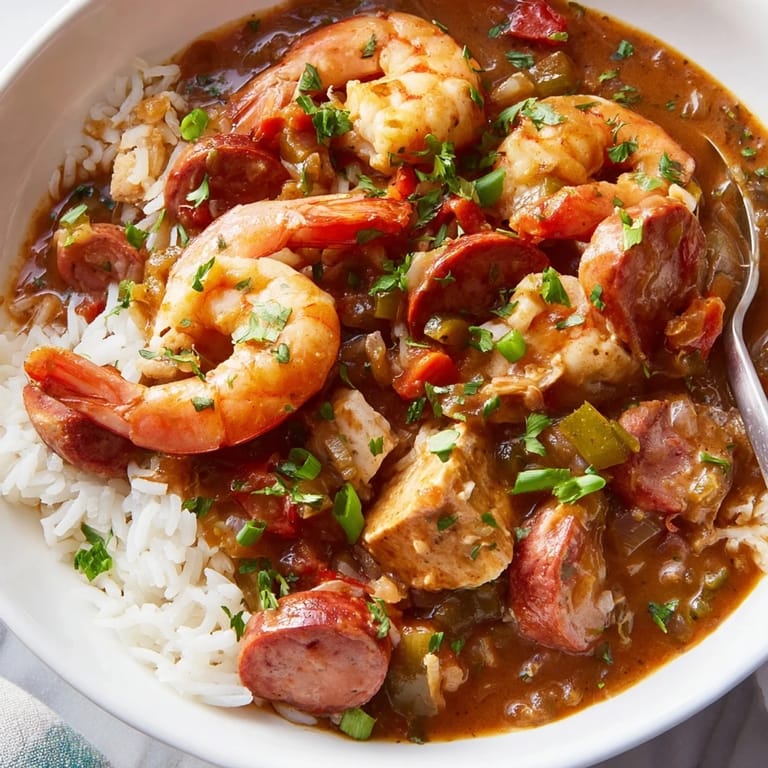
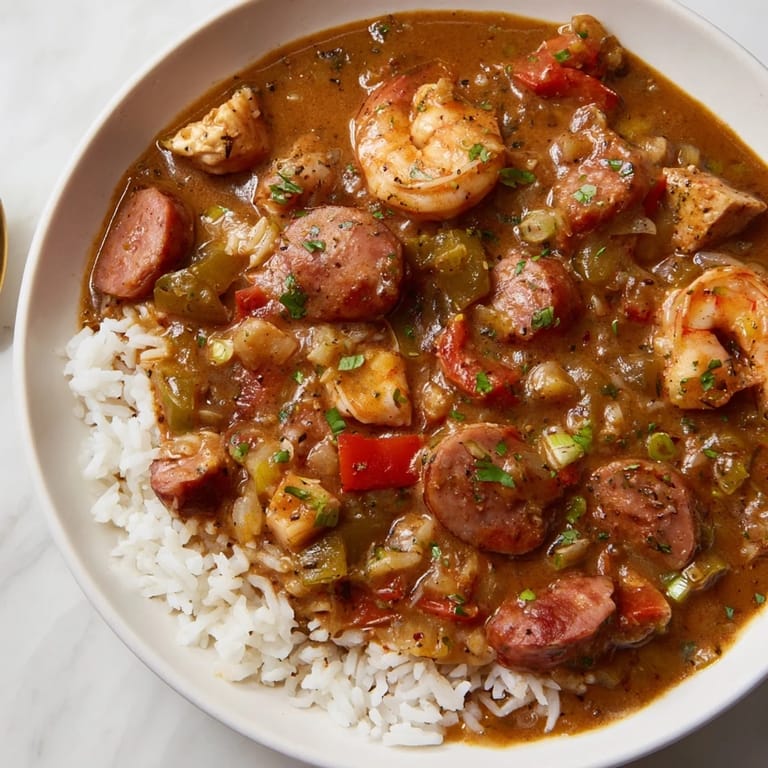
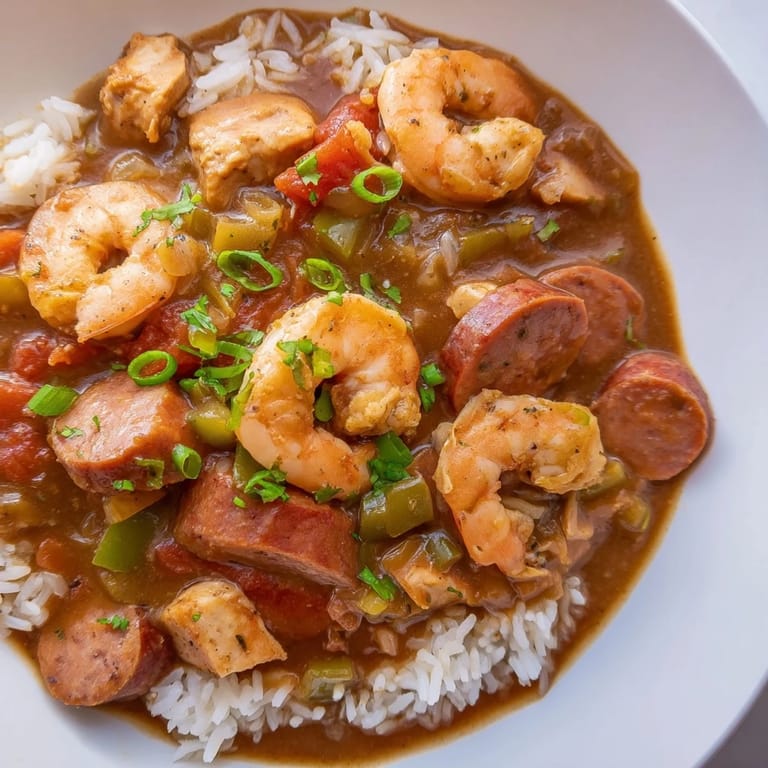
- Ladle gumbo over fluffy rice and top with fresh scallions and parsley. The rice soaks up the broth, and everything becomes one warm, forgiving bowl.
 Save
Save The first time I got the roux exactly right, I called my neighbor to tell her. She laughed and said I was finally beginning to understand that cooking is patience wearing a wooden spoon. That phone call meant more than the gumbo itself, though the gumbo was damn good.
The Roux—Heart of the Dish
Everything hinges on this foundation. The roux transforms from sandy mixture to peanut-colored to deep mahogany over those 15 to 20 minutes of constant stirring. Your arm might get tired, but that's when you know it's working. The color tells the story: light roux adds body without much flavor, but a deep chocolate roux brings richness and a subtle nuttiness that makes people pause mid-bite and ask what that flavor is. You can't hurry it or skip it, and that's exactly the point.
Proteins and Variations
The version here balances sausage and chicken, but gumbo is adaptable. For seafood only, skip both meats and add crab, oysters, or extra shrimp instead. Each protein tells a different story—sausage-forward gumbo tastes like celebration, chicken feels like comfort, and seafood tastes like the coast. The cooking time doesn't change much, though seafood variants often simmer a bit less to keep everything tender.
Pairing and Serving Wisdom
Gumbo deserves rice as its foundation, but also consider it as a reason to pull out something cold to drink. A crisp lager cuts through the richness beautifully, while a chilled white wine brings freshness that balances the depth. Serve hot sauce on the side so everyone can adjust their own heat level without apology.
- Make extra gumbo—it tastes even better the next day when flavors have melded overnight.
- This dish freezes well for up to three months, becoming a future version of comfort you can return to anytime.
- Rice cooked separately keeps the gumbo from becoming thick and stodgy; serve them together, not mixed.
 Save
Save Gumbo teaches you that the best meals aren't about perfection—they're about showing up and stirring the pot long enough for flavors to become friends. That's enough.
Recipe Questions & Answers
- → What is the ‘holy trinity’ in this stew?
The 'holy trinity' consists of finely chopped onion, bell pepper, and celery, which form the aromatic base of this dish.
- → How is the roux prepared?
The roux is made by slowly whisking flour into hot vegetable oil over medium heat until it reaches a deep chocolate brown color, which adds richness and depth.
- → Can I make this stew with seafood only?
Yes, you can omit the chicken and sausage, and add seafood such as shrimp, crab, oysters, or fish for a seafood variation.
- → What role does filé powder play?
Filé powder, made from ground sassafras leaves, is added at the end for thickening and a unique earthy flavor, enhancing the stew’s texture.
- → How long should the stew simmer?
The stew simmers uncovered for about 45 minutes to meld flavors, with shrimp added in the last 10 minutes if using.
- → What are ideal garnishes for this stew?
Sliced scallions and freshly chopped parsley add freshness and color as garnishes before serving.