 Save
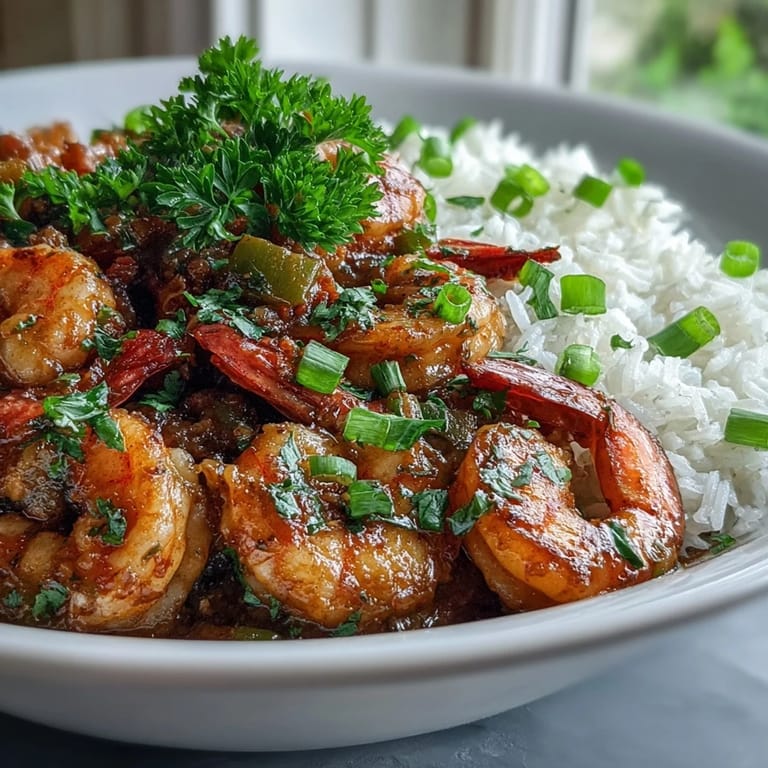
Save The kitchen was thick with humidity the afternoon I finally nailed my roux without panicking. I'd watched my neighbor stir hers with one hand while holding a glass of iced tea in the other, talking the whole time like it was nothing. Mine always seized up or burned, until I learned to trust the slow build and keep my nerves out of it. Now when I make étouffée, I pour myself something cold, turn on the fan, and let the roux teach me patience all over again.
I made this for a group of friends who'd never been south of Maryland, and they went quiet after the first bite. One of them looked up and said it tasted like a place, not just a meal. I realized then that étouffée isn't just about the ingredients, it's about the weight of the sauce, the give of the shrimp, and the way the rice soaks up all that dark, spicy comfort.
Ingredients
- Vegetable oil: This is your base for the roux, and it can handle the heat without smoking or adding weird flavors.
- All purpose flour: It thickens and darkens into the soul of the dish, but you have to stir it like you mean it or it will betray you.
- Onion: The sweet foundation that softens into the background and lets everything else shine.
- Green bell pepper: Adds a slight bitterness that balances the richness, and it's one third of the holy trinity.
- Celery: Brings a quiet, earthy note that you'd miss if it wasn't there.
- Garlic: Just enough to make the kitchen smell like you know what you're doing.
- Shrimp: Sweet, tender, and they cook fast, so add them later or they'll turn rubbery.
- Seafood stock: This is where the ocean comes in, though chicken stock works if that's what you have.
- Worcestershire sauce: A splash of umami that deepens everything without announcing itself.
- Cajun seasoning: The spice blend that makes it taste like Louisiana, not just dinner.
- Cayenne pepper: Heat that builds slowly, so start small and taste as you go.
- Bay leaf: One leaf, a lot of subtle magic.
- White rice: Fluffy and plain, it's the stage for all that saucy drama.
- Green onions and parsley: Fresh, bright, and they wake up the whole plate right before serving.
Tired of Takeout? 🥡
Get 10 meals you can make faster than delivery arrives. Seriously.
One email. No spam. Unsubscribe anytime.
Instructions
- Start the Roux:
- Heat the oil in a heavy pot over medium heat, then whisk in the flour slowly. Stir constantly and watch it go from pale to golden to the color of old pennies, about 15 to 20 minutes.
- Add the Holy Trinity:
- Toss in the onion, bell pepper, and celery, stirring them into the roux until they soften and smell sweet, about 5 to 7 minutes. Add the garlic and let it bloom for a minute.
- Build the Base:
- Pour in the stock gradually, whisking to marry it with the roux. It'll bubble and thicken, and that's when you know it's working.
- Season and Simmer:
- Add the shrimp, Worcestershire, Cajun seasoning, cayenne, bay leaf, salt, and pepper. Bring it to a gentle simmer, then lower the heat and let it cook uncovered for 20 to 30 minutes, stirring now and then.
- Finish and Serve:
- Taste it, adjust the salt and heat, pull out the bay leaf, and spoon it over hot rice. Scatter green onions and parsley on top.
 Save
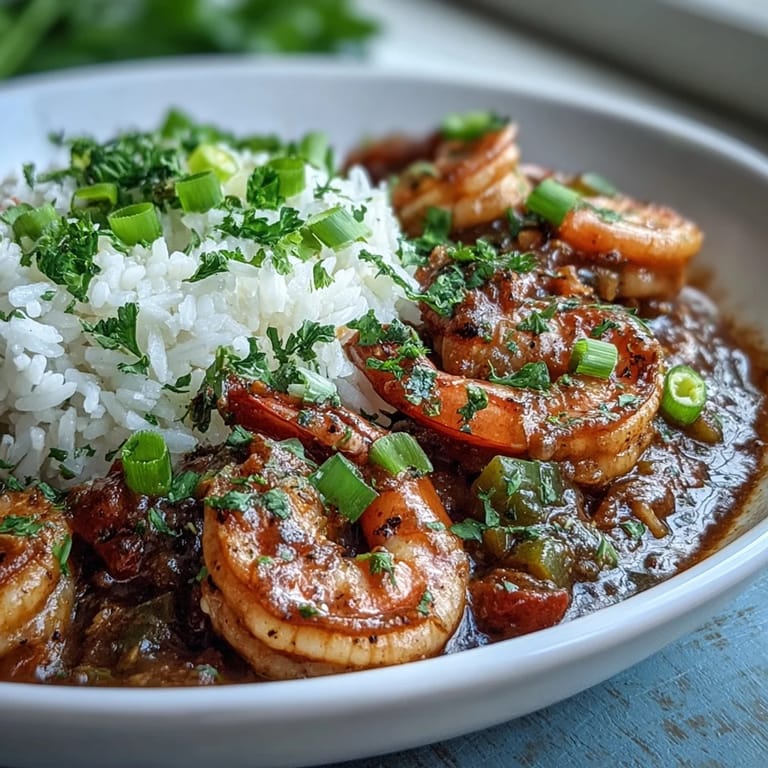
Save My uncle used to say that étouffée is a one pot conversation, every ingredient talking to the next until they all agree. I didn't understand that until I stopped measuring so carefully and started tasting, adjusting, trusting my tongue over the recipe. Now when I serve it, I know it's ready because the kitchen smells like comfort and the sauce clings to the spoon like it has somewhere to be.
How to Get Your Roux Right
The roux is everything, and it demands your full attention. Use a heavy pot so the heat spreads evenly, and keep your whisk moving in slow, steady circles. If you see dark specks forming, your heat is too high. The smell will shift from raw flour to toasted nuts to something almost chocolatey, and that's your cue to add the vegetables. Don't walk away, don't check your phone, just stay with it and you'll be fine.
Swaps and Variations
Crawfish is traditional and slightly sweeter than shrimp, but it can be hard to find outside Louisiana. Chicken thighs, cut into chunks, turn this into a heartier cold weather meal. Andouille sausage adds smoke and heat, and mushrooms give it an earthy, almost meaty richness if you're skipping the seafood. You can also mix proteins, half shrimp and half sausage, and no one will complain.
Storing and Reheating
Étouffée keeps in the fridge for up to three days, and honestly, it's better the next day when the flavors have had time to settle into each other. Reheat it gently on the stove with a splash of stock or water to loosen the sauce. If you freeze it, leave out the shrimp and add them fresh when you reheat, because frozen cooked shrimp turn mushy. Serve it over fresh rice, never reheated rice, because that's where the magic lives.
- Store the étouffée and rice separately so the rice doesn't turn to mush.
- Freeze in individual portions for easy weeknight dinners.
- Taste before serving, it might need a pinch of salt or a squeeze of lemon to brighten it up again.
 Save
Save This dish doesn't need much from you except time and attention, and in return it gives you a bowl of something that feels like home even if you've never been to New Orleans. Make it once, and you'll know why people guard their roux secrets like family recipes.
Recipe Questions & Answers
- → What makes an authentic étouffée?
A genuine étouffée starts with a dark roux cooked to a deep chocolate color, which provides the foundation of flavor. The dish must include the holy trinity of Cajun cooking—onions, bell peppers, and celery—along with fresh shellfish and traditional seasonings like bay leaf and cayenne pepper.
- → How dark should the roux be?
The roux should be cooked to a deep chocolate brown color, typically taking 15-20 minutes of constant stirring. This dark stage develops the nutty, rich flavor characteristic of authentic Cajun cuisine, but be careful not to burn it or it will taste bitter.
- → Can I make this ahead of time?
Yes, étouffée actually improves after resting as the flavors meld together. Prepare it up to 2 days in advance and refrigerate. Reheat gently over low heat, adding a splash of stock if the sauce has thickened too much.
- → What protein alternatives work well?
Crawfish is the traditional alternative to shrimp, offering a sweeter, more delicate flavor. You can also use chicken, andouille sausage, or create a vegetarian version with mushrooms and vegetable stock while maintaining the dark roux base.
- → How do I adjust the spice level?
Start with less Cajun seasoning and cayenne, then gradually add more to taste. For a milder version, omit the cayenne entirely. Remember that the heat will intensify as the dish sits, so season conservatively at first.
- → What's the difference between étouffée and gumbo?
While both start with a roux, étouffée typically has a thicker sauce and focuses on one main protein, usually shellfish. Gumbo is more soup-like, contains multiple proteins, and often includes okra or file powder as additional thickeners.