 Save
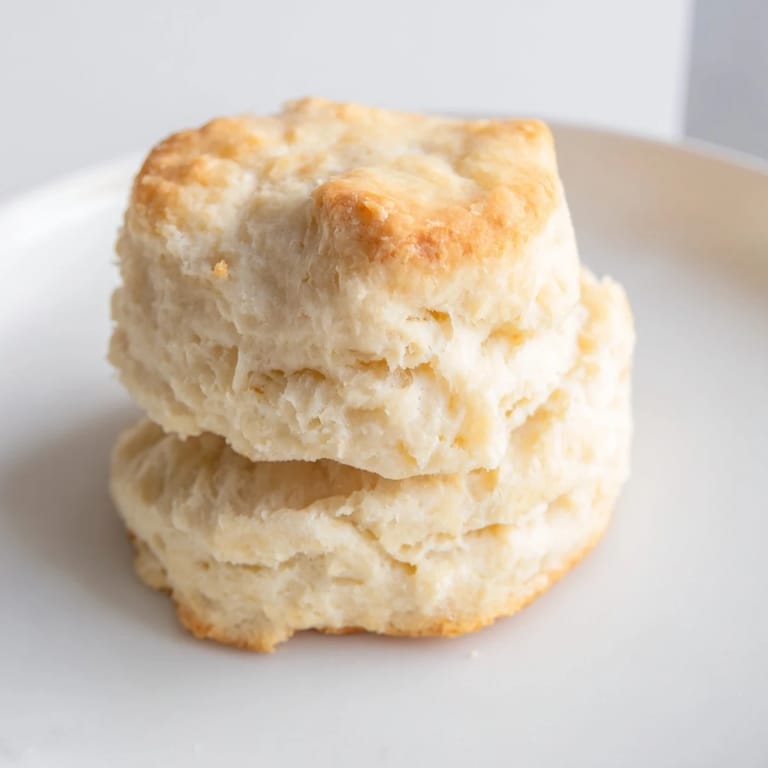
Save My grandmother kept a cast-iron skillet on her stovetop at all times, but her real magic happened in the oven with these buttermilk biscuits. I'd watch her hands move through the dough with this practiced efficiency, never rushing, and the kitchen would fill with a warm, slightly tangy aroma that meant comfort was moments away. The first time I tried making them alone, I overmixed the dough into submission and ended up with hockey pucks, but that failure taught me more than any perfect batch ever could. Now, years later, these biscuits are the first thing I reach for when someone needs feeding or when I need to feel grounded.
Last Thanksgiving, my sister and I made a double batch of these at five in the morning while the house was still quiet. We weren't talking much, just working side by side, and somewhere between the cutting and the folding, she mentioned how stressed she felt about everything. By the time those biscuits came out of the oven, she was laughing at something ridiculous I'd said, and we sat in the kitchen eating them warm with good butter and homemade jam before anyone else woke up. That's when I realized these weren't just breakfast—they were permission to slow down.
Ingredients
- All-purpose flour: The foundation—use it cold and fresh from the bag, never warmed or sifted twice, because you want those delicate gluten strands to stay sleepy until the oven wakes them up.
- Baking powder and baking soda: This combination creates lift and a subtle tang that plays beautifully with the buttermilk, but measure with a light hand or your biscuits will taste soapy.
- Sea salt: Fine salt dissolves better than kosher and distributes more evenly throughout the dough.
- Granulated sugar: Just enough to enhance browning and balance the buttermilk's tang without making these sweet.
- Cold unsalted butter: The star player—cut it into cubes and keep it cold until the last second, because those little pockets of butter create the flakiness that makes people close their eyes when they bite in.
- Cold buttermilk: The acid activates the baking soda and tenderizes the flour, creating crumb so tender it practically dissolves. If you don't have buttermilk, make it: regular milk plus lemon juice or vinegar, left to sit for five minutes, works perfectly.
Tired of Takeout? 🥡
Get 10 meals you can make faster than delivery arrives. Seriously.
One email. No spam. Unsubscribe anytime.
Instructions
- Heat your oven and prepare:
- Preheat to 220°C (425°F) and line a baking sheet with parchment paper. A hot oven is essential—it creates steam that helps biscuits rise tall and golden.
- Mix the dry ingredients:
- Whisk flour, baking powder, baking soda, salt, and sugar together in a large bowl. This distributes the leavening agents evenly so you get consistent rise across all the biscuits.
- Work in the cold butter:
- Add your cold, cubed butter to the dry mixture and work it in quickly with a pastry cutter or your fingertips until the mixture resembles coarse crumbs with some pea-sized pieces of butter still visible. Those butter pieces are your secret weapon—they melt during baking and leave behind flaky layers.
- Add the buttermilk gently:
- Make a well in the center, pour in the cold buttermilk, and stir with a fork just until the dough comes together. Stop as soon as everything is moistened—overmixing activates the gluten too much and toughens your biscuits.
- Fold for flakiness:
- Turn the dough onto a lightly floured surface and gently pat it into a rectangle about 1.5 cm thick. Fold it in half, pat it out gently, and repeat this folding and patting three times total. This lamination technique mimics what puff pastry does, creating those beautiful, distinct layers.
- Cut and shape:
- Pat the dough to a final thickness of 2.5 cm and cut out biscuits with a 6 cm round cutter, pressing straight down without twisting (twisting seals the edges and prevents proper rise). Gather scraps gently and repeat until all the dough is used.
- Brush and bake:
- Place biscuits close together on your prepared baking sheet—they'll rise up rather than out this way—and brush the tops lightly with buttermilk. Bake for 13–15 minutes until tall and golden brown, then let cool for a few minutes before serving warm.
 Save
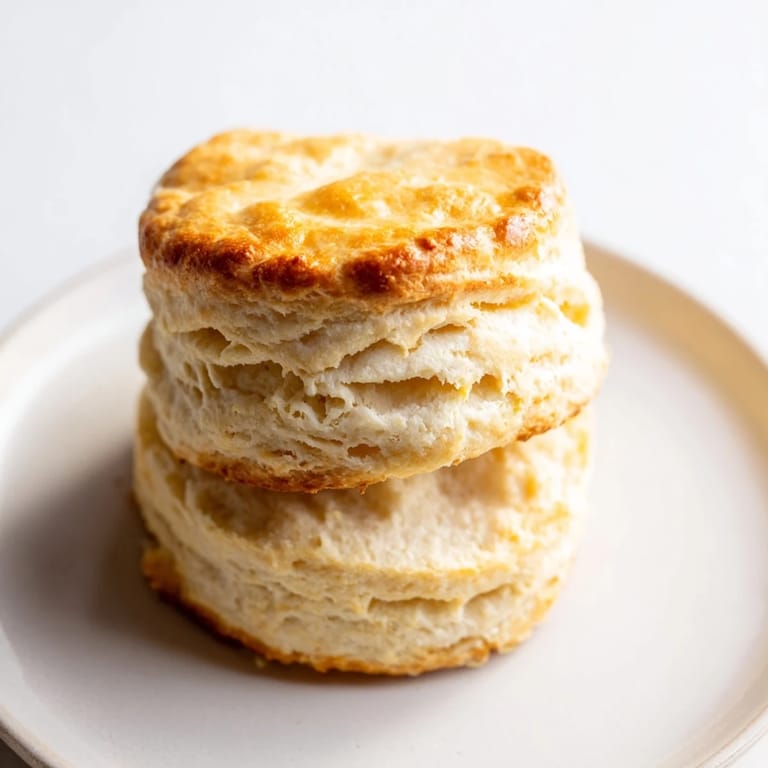
Save There's a moment, right when you pull biscuits out of the oven, where the whole kitchen shifts into something warmer and more hopeful than it was thirty minutes before. The smell alone is enough to bring anyone to the kitchen, but it's the sight of those golden-brown domes that makes people believe good things are possible.
The Buttermilk Secret
Buttermilk isn't just a substitute for regular milk—it's a completely different ingredient that changes the entire character of your biscuits. The acidity tenderizes the flour and activates the baking soda, creating that delicate crumb and subtle tang that makes these taste like they came from a proper Southern kitchen. I learned this the hard way when I tried regular milk on a lazy morning and ended up with something more like hockey pucks than biscuits.
Beyond Breakfast
These biscuits are remarkably versatile and show up in my kitchen at the most unexpected times. They're incredible with fried chicken and gravy, perfect alongside a simple soup, and absolutely shine when split open and filled with scrambled eggs and bacon on a weekend morning. I've also been known to split one, spread honey or jam on it, and eat it while standing at the counter at three in the afternoon when I need a quiet moment and something real.
Making Them Your Own
While these classic biscuits are perfect on their own, there's real freedom in adapting them to match what you're craving. Sharp cheddar and black pepper transform them into something savory and elegant, fresh herbs like chives or thyme add brightness, and even a pinch of cayenne can create a subtle heat that surprises and delights.
- For cheddar biscuits, fold in ½ cup of grated cheese along with the dry ingredients and add a crack of black pepper.
- If you're adding herbs, use fresh and finely chopped—about 2 tablespoons mixed into the dry ingredients—and reduce the salt slightly to compensate.
- Leftover biscuits keep for a day or two and can be split and toasted gently to restore some of their warmth and texture.
 Save
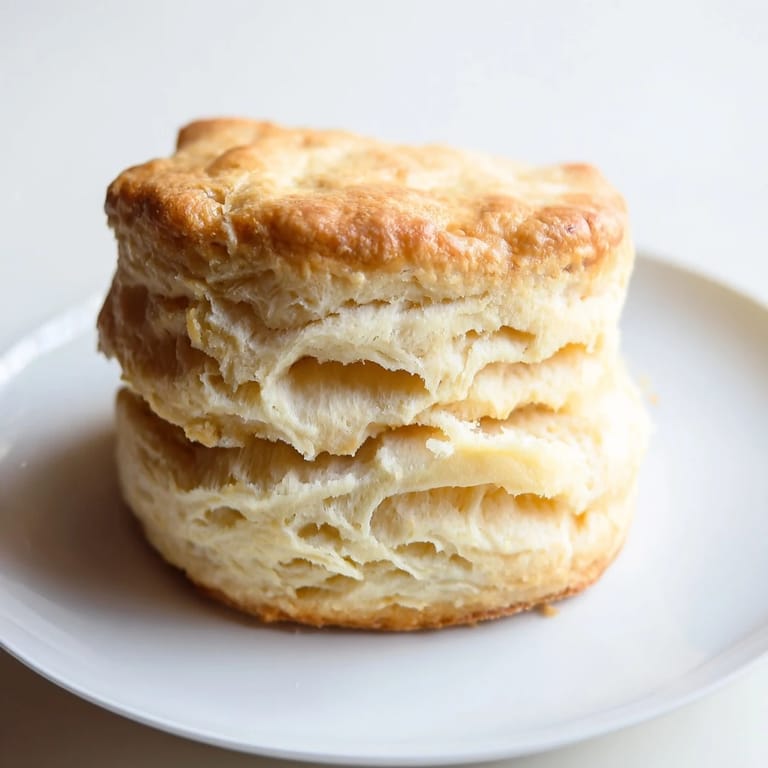
Save These biscuits have taught me that sometimes the simplest things—butter, flour, buttermilk, and patience—create the most meaningful moments. There's something quietly powerful about serving warm food made with your own hands.
Recipe Questions & Answers
- → What makes the biscuits flaky and soft?
Cold cubed butter is quickly worked into the flour mixture to create pea-sized pieces. Folding the dough multiple times builds layers, which bake into a flaky texture while buttermilk ensures softness.
- → Can I substitute buttermilk if I don't have any?
Yes, combine ¾ cup milk with 2 teaspoons lemon juice or vinegar, let sit for 5 minutes, then use it as a buttermilk substitute.
- → How do I know when the biscuits are done?
Bake until biscuits rise tall and turn golden brown on top, usually about 13–15 minutes in a 220°C (425°F) oven.
- → Can I add flavors to the dough?
Yes, try mixing in grated cheddar, fresh herbs, or a pinch of black pepper before baking to enhance flavor.
- → What is the best way to handle the dough?
Gently pat the dough into thickness, fold it three times to build layers, and avoid overmixing to keep the texture light and flaky.