 Save
Save There's something about the smell of ribs slow-cooking in the oven that makes a Saturday afternoon feel like it's moving at exactly the right pace. My neighbor once caught that smoke drifting over the fence and showed up at my back door asking what sorcery was happening in my kitchen. I realized then that ribs aren't just food—they're an invitation, a promise that something extraordinary is about to happen at the table.
I made these for a Fourth of July gathering where I was genuinely nervous nobody would show up. Eight people came, and I watched them go quiet mid-conversation when they bit into the first rib. That silence was everything—better than any compliment.
Ingredients
- Pork or beef ribs (1.5–2 kg / 3–4 lbs): Choose ribs with good meat coverage; beef ribs tend to be meatier, pork ribs more tender. Either works beautifully.
- Olive oil (2 tbsp): This helps the dry rub cling to the meat and prevents sticking on the pan.
- Brown sugar (2 tbsp): Caramelizes during cooking and adds subtle sweetness that balances smoke and spice.
- Smoked paprika (1 tbsp): The real secret—it gives that backyard barbecue depth without needing an actual smoker.
- Garlic powder, onion powder, salt, black pepper (1 tsp each): These create savory foundation so nothing tastes one-dimensional.
- Cayenne pepper (½ tsp, optional): Add this only if you like a gentle heat that builds as you eat.
- Barbecue sauce (1 cup): Use something you'd actually want to eat on its own; the sauce matters here.
- Honey (2 tbsp): Sweetens the glaze and helps it caramelize into a sticky, glossy coat.
- Apple cider vinegar (1 tbsp): Cuts through richness and adds a brightness that keeps the dish from feeling heavy.
Tired of Takeout? 🥡
Get 10 meals you can make faster than delivery arrives. Seriously.
One email. No spam. Unsubscribe anytime.
Instructions
- Prep the ribs:
- Look at the back of your ribs and you'll probably see a thin papery membrane. Slide a butter knife under it, grab it with a paper towel, and peel it away—it comes off easier than you'd think and texture-wise makes all the difference. Pat everything dry with paper towels so the rub actually sticks.
- Build the dry rub:
- Mix all your spices in a small bowl and give it a quick stir. The brown sugar should break up any little clumps. This is your flavor foundation.
- Coat the ribs:
- Rub a thin layer of olive oil all over the meat first, then generously coat with the spice mixture. Get into the crevices between the bones. You want it to look almost crusty before it goes in the oven.
- Set up for slow cooking:
- Line a baking sheet with foil, place ribs meat-side up, cover tightly with another layer of foil, and slide into a 150°C (300°F) oven. This low-and-slow approach is what makes them fall-apart tender.
- Let time do the work:
- Bake for 2 to 2½ hours. You'll know they're ready when the meat pulls away from the bones with barely any resistance. Resist the urge to open the oven and peek too often—every time you do, heat escapes.
- Make the glaze:
- While ribs cook, stir together your barbecue sauce, honey, and apple cider vinegar. The vinegar keeps it from being too sweet and syrupy.
- Get them sticky:
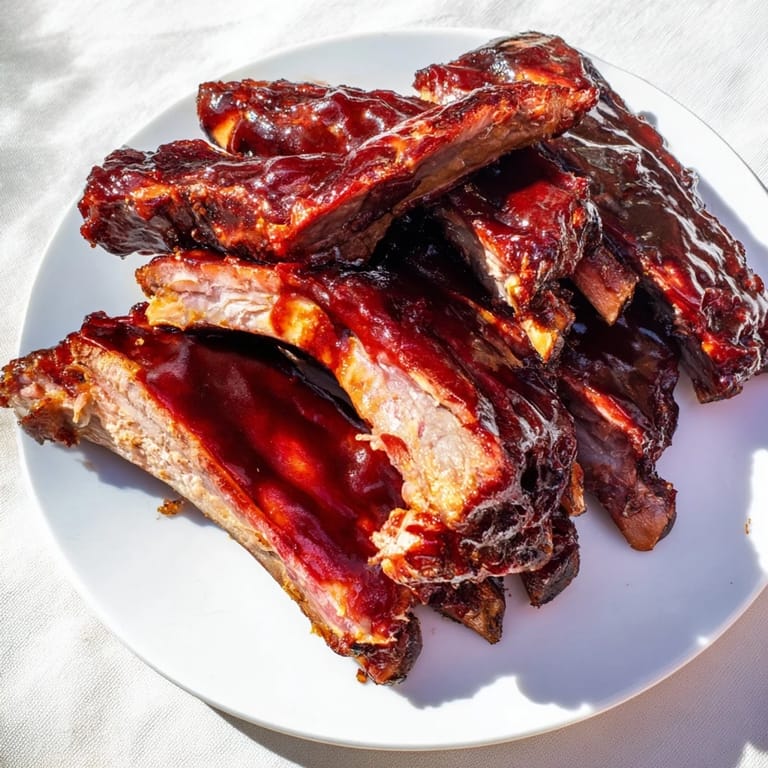
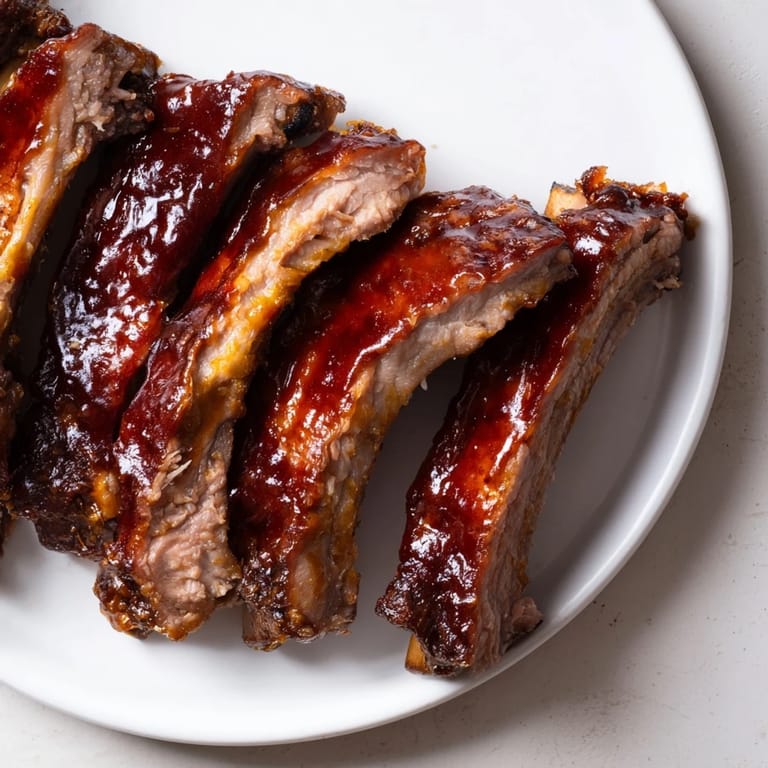
- Once ribs are tender, remove the foil, brush on your glaze, then either pop them under the broiler at 220°C (425°F) or onto a medium-high grill for 10–15 minutes. Watch for that deep caramelization and a slight char at the edges. Baste once more halfway through if you want extra shine.
- Rest and serve:
- Let them sit for 5 minutes so the glaze sets up, then slice between the bones. Serve extra sauce on the side because people will want more.
 Save
Save The first time someone asked for the recipe, I realized I'd stopped thinking of this as complicated cooking. It became something I made on regular Saturdays, proof that you don't need restaurant-level skills to feed people something they'll actually remember.
The Smoke Without the Smoker
Smoked paprika is doing all the heavy lifting here. If you ever find yourself wanting that unmistakable barbecue flavor but don't have access to an actual smoker, this ingredient is your shortcut. I learned this accidentally when someone asked if these ribs had been smoked over wood, and I got to deliver the satisfying news that they were just the oven the whole time. That paprika plus a low, slow bake creates something that tastes like it took all day to make.
Why the Oven Works Better Than You'd Expect
Ovens give you control that grills sometimes don't. At 300°F, the temperature stays constant, the heat surrounds the meat evenly, and you're not fighting wind or flare-ups. There's something freeing about putting ribs in the oven and knowing exactly when they'll be done. The high-heat finish at the end—whether in the broiler or on a grill—gives you that final caramelization without drying things out. It's honestly the best of both worlds.
Sides and Serving
Ribs are generous. They pair with almost anything but especially shine with something creamy and cool next to them. A sharp coleslaw cuts through the richness, cornbread soaks up sauce, and baked beans complete the picture. If you're grilling, you might toss some corn on the grates too. The best meals feel abundant and unhurried, and these ribs set that tone from the first bite.
- Make coleslaw the morning of—the flavors get more integrated and it stays crisp if kept cold.
- If using maple syrup instead of honey, reduce it to 1½ tbsp since it's sweeter than honey.
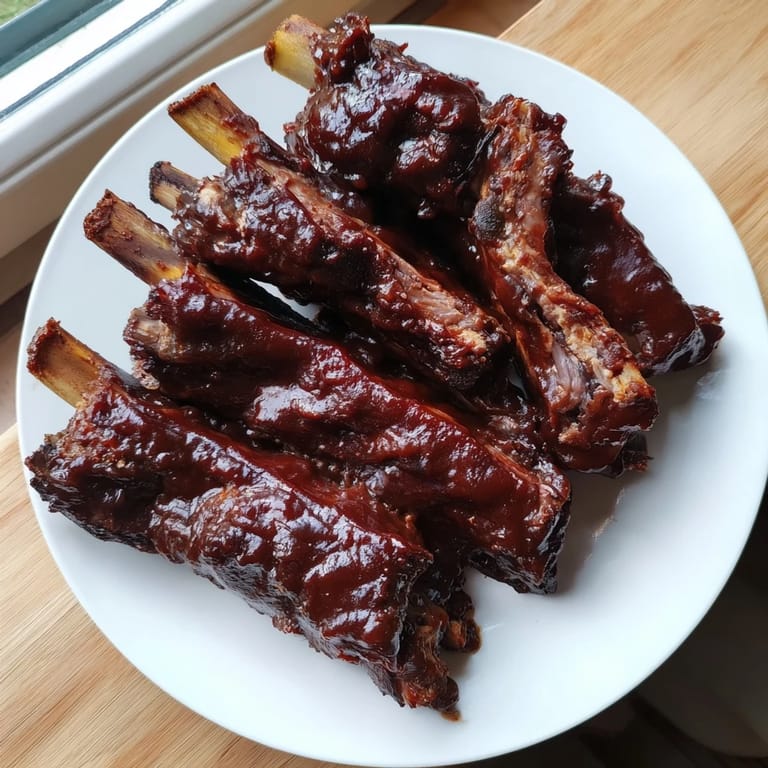
- Set out extra napkins and wet wipes; these ribs are meant to be eaten with your hands.
 Save
Save These ribs have a way of turning an ordinary meal into something that feels like celebration. Serve them when you want people to feel welcome and cared for.
Recipe Questions & Answers
- → How do I ensure ribs are tender?
Slow cooking at a low temperature for 2 to 2½ hours helps break down connective tissue, resulting in tender, juicy ribs.
- → What is the purpose of the dry rub?
The dry rub infuses the meat with a balanced blend of sweetness, smokiness, and spice, enhancing the flavor beneath the glaze.
- → Can I use beef instead of pork ribs?
Yes, both pork and beef ribs work well with this method, though beef may require slightly longer cooking for tenderness.
- → Why brush the ribs with sauce before the final cook?
Applying sauce before the final high heat step allows it to caramelize and become sticky, adding extra flavor and texture.
- → What sides complement these ribs best?
Traditional pairings like coleslaw, cornbread, or baked beans complement the smoky richness and balance the meal.