 Save
Save I discovered dandelion honey quite by accident at a farmers market one April, when the vendor insisted I taste it straight from the jar. The floral note was so delicate yet distinct that I immediately thought of baking with it, and this cake was born from that single moment of curiosity. The first time I pulled it from the oven, the kitchen smelled like spring itself—honey, lemon, and something almost perfumed that my guests couldn't quite identify. They kept asking for the secret ingredient, and I loved watching their faces when I told them it was the flowers themselves, captured in golden sweetness.
I made this for my sister's baby shower one May afternoon, and it somehow became the thing everyone asked for the recipe for—even over the lavish tiered dessert table. Watching her cut into it with that surprised smile, I realized this cake has a quiet magic; it doesn't demand attention, but once you taste it, you don't forget it. That's when it stopped being just a recipe and became something I wanted to make for people I cared about.
Ingredients
- All-purpose flour (2 cups): Make sure it's fresh and measured by spooning and leveling, not scooping straight from the bag, or you'll end up with a dense cake.
- Baking powder and baking soda (1 1/2 tsp and 1/2 tsp): These two work together to give the cake its tender crumb; don't skip the baking soda even if you have plenty of powder.
- Fine sea salt (1/2 tsp): It enhances the floral notes and keeps the sweetness from feeling one-dimensional.
- Unsalted butter (1/2 cup): Room temperature is non-negotiable here—cold butter won't cream properly and you'll miss that light, fluffy base.
- Dandelion honey (1/2 cup): If you can't find it, regular honey works, but the dandelion variety has a subtle complexity that makes this cake special; seek it out at farmers markets or specialty shops.
- Granulated sugar (1/2 cup): This balances the honey's floral nature without overpowering it.
- Large eggs (3): Room temperature eggs incorporate into the batter more smoothly and create a better structure.
- Pure vanilla extract (1 tsp): Cheap vanilla will muddy the delicate flavors, so use the real thing.
- Whole milk (1/2 cup): Also room temperature; cold milk can cause the batter to seize up slightly.
- Lemon zest and juice (2 tbsp each): The zest carries bright citrus notes while the juice adds moisture and tang that cuts through the sweetness.
- Powdered sugar (1 cup): Sift it before measuring to avoid lumps in your glaze.
- Dandelion honey for glaze (1 tbsp): A touch more honey in the glaze creates a silky finish and ties the whole cake together.
Tired of Takeout? 🥡
Get 10 meals you can make faster than delivery arrives. Seriously.
One email. No spam. Unsubscribe anytime.
Instructions
- Heat your oven and prep your pan:
- Preheat to 350°F and grease your 9-inch round cake pan thoroughly with butter or oil, then dust it with flour—parchment paper works too, but I like the slight crust you get from the flour. Set this aside while you work through the rest of the recipe.
- Combine your dry ingredients:
- Whisk together the flour, baking powder, baking soda, and salt in a medium bowl, then set it aside. This step aerates the flour and distributes the leavening agents evenly, which is why it matters.
- Cream butter, honey, and sugar together:
- In a large bowl, beat the softened butter, dandelion honey, and sugar for about 3 minutes until the mixture is light, fluffy, and noticeably paler than when you started. You should be able to see the change; it's when the mixture has incorporated enough air to give the cake its tender texture.
- Add eggs and flavorings:
- Beat in each egg individually, waiting a moment after each one to make sure it's fully incorporated before adding the next. Once all eggs are in, stir in the vanilla extract, lemon zest, and lemon juice, which will give the batter its distinctive brightness.
- Alternate flour and milk gently:
- Add the dry ingredients in three parts, alternating with the milk and starting and ending with the flour mixture. Stir until just combined—overmixing develops gluten and makes the cake tough, so stop as soon as you don't see white streaks of flour.
- Bake until golden:
- Pour the batter into your prepared pan and smooth the top with a spatula. Bake for 35 to 40 minutes; the cake is done when a toothpick inserted into the center comes out clean or with just a few crumbs clinging to it.
- Cool with patience:
- Let the cake rest in the pan for 10 minutes to set slightly, then turn it out onto a wire rack to cool completely. Rushing this step can cause the cake to break, and a completely cool cake is essential for the glaze to adhere properly.
- Make the glaze:
- Whisk together the sifted powdered sugar, lemon juice (add it gradually until you reach a consistency that drips slowly off the whisk), and dandelion honey. It should be smooth and slightly thick, like you're coating the back of a spoon.
- Finish and serve:
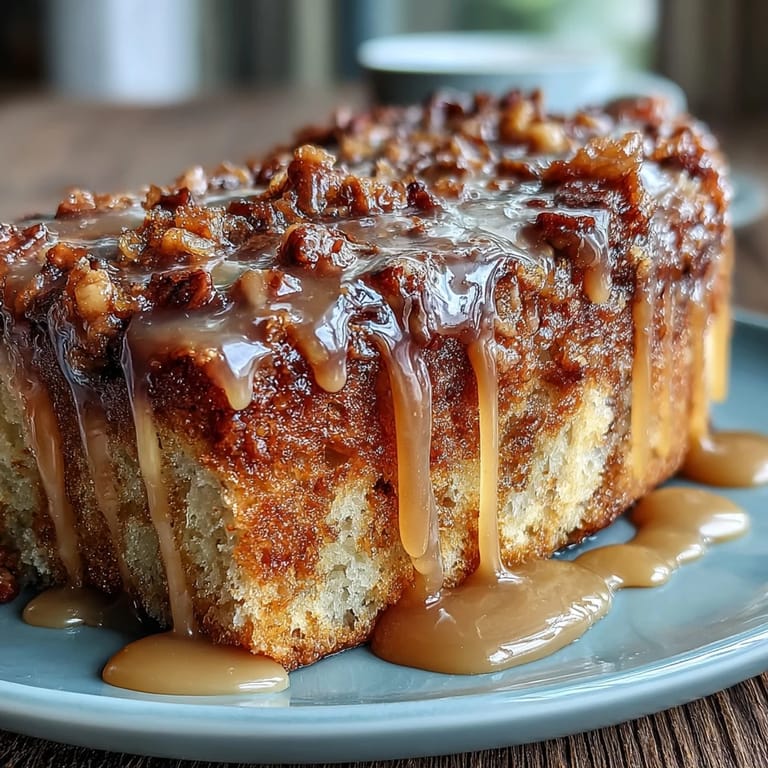
- Drizzle the glaze over the cooled cake in a loose pattern, letting some pool in the cracks, and allow it to set for 10 to 15 minutes before slicing. The wait ensures the glaze sets firm enough that it doesn't slide off with each slice.
 Save
Save One afternoon, I brought this cake to a friend who was going through something difficult, not because I thought dessert could fix anything, but because I wanted her to know someone was thinking of her. She told me later that she kept a slice of it for days, eating a small piece whenever she needed a moment of gentleness. That's when I understood that this cake carries something beyond ingredients—it's quiet, thoughtful, and somehow comforting in a way that has nothing to do with calories.
The Magic of Dandelion Honey
Dandelion honey is worth seeking out because it brings a subtle floral note that regular honey simply cannot match. The first time I used it, I was skeptical that anyone would taste the difference, but guests consistently described the cake as tasting like spring, like flowers, like something they couldn't quite name. It's that ineffable quality that makes this cake memorable, and it's worth the extra effort to source good honey rather than settling for what's in your pantry.
Why Lemon and Honey Love Each Other
There's a reason this pairing shows up in tea and in folk remedies—lemon and honey are naturally complementary, the brightness cutting through the sweetness while the honey adds richness and body. In this cake, the lemon zest brings an almost perfumed citrus note, while the juice adds moisture and prevents the cake from ever feeling cloying, even though the honey makes it naturally sweet. Together, they create a balance that lets each flavor speak instead of muddying into one confused sweetness.
Storage and Serving Suggestions
This cake actually improves after a day or two in an airtight container, as the crumb becomes even more moist and the flavors deepen slightly. I like to serve thin slices with herbal tea—chamomile or floral teas especially—or even a light white wine that echoes the honey and lemon.
- Store leftovers covered at room temperature for up to three days, and resist the urge to refrigerate, which will dry it out faster.
- Slice with a thin, serrated knife dipped in hot water and wiped clean between cuts for neat, beautiful pieces.
- If you do add fresh dandelion petals to the batter, make absolutely sure they're from an area that hasn't been sprayed with pesticides.
 Save
Save This cake has become my answer to the question of what to make when you want to feel like you've done something special without spending hours in the kitchen. It's the kind of recipe that proves simplicity and thoughtfulness matter more than complexity.
Recipe Questions & Answers
- → What gives this cake its unique flavor?
The use of dandelion honey delivers a floral sweetness that distinguishes the cake, complemented by fresh lemon zest and juice for brightness.
- → Can I substitute dandelion honey with other types of honey?
Yes, regular honey can be used as a substitute, though it may alter the subtle floral notes unique to dandelion honey.
- → How is the lemon glaze prepared?
The glaze combines powdered sugar with freshly squeezed lemon juice and a touch of dandelion honey, whisked until smooth and drizzled over the cooled cake.
- → What tools are recommended for making this cake?
A 9-inch round cake pan, mixing bowls, an electric mixer or whisk, measuring cups and spoons, a microplane or zester, and a wire rack for cooling are recommended.
- → How should leftovers be stored?
Leftover cake should be kept in an airtight container at room temperature and consumed within three days for best freshness.