 Save
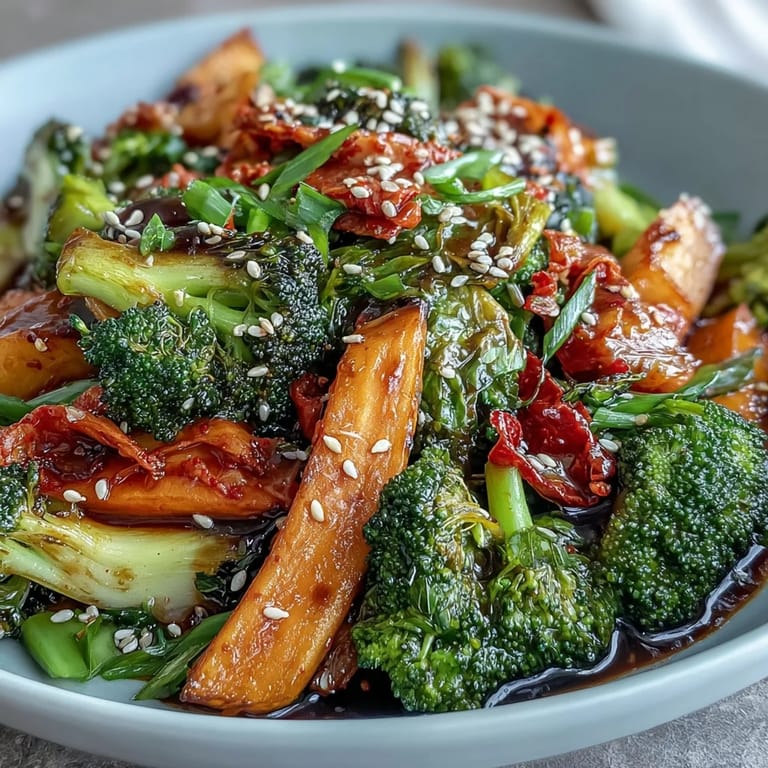
Save There's something about the sound of vegetables hitting a hot wok that makes me feel like I'm cooking with intention. One Tuesday evening, I was staring at my crisper drawer—half full of winter vegetables that needed rescuing—when I realized I had a jar of kimchi in the back. That's when it clicked: what if I treated fermented vegetables not as an afterthought, but as the star? This stir-fry was born from that moment, and it's become my go-to when I want something warm, vibrant, and genuinely good for my gut.
I made this for my sister last winter when she was going through a phase of trying to eat more intuitively, less reactively. She sat at my kitchen counter while I chopped vegetables, and by the time I'd finished layering in the kimchi at the end, she was leaning in to smell it. That's when I knew it had something special—people don't usually get excited about a vegetable dish until they taste it, but this one sold itself on aroma alone.
Ingredients
- Broccoli florets: They soften just enough to be tender but hold their structure, giving you something substantial to grab with your chopsticks or fork.
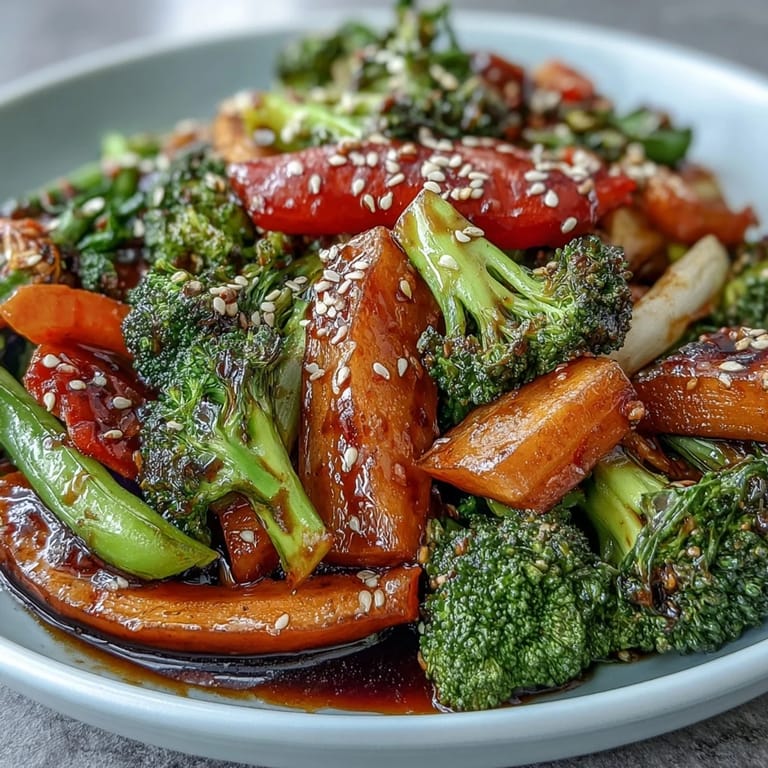
- Carrots and parsnip: Bias-sliced means more surface area for caramelization, and the parsnip adds an earthy sweetness that balances the spice.
- Sweet potato matchsticks: These cook quickly and add a creamy texture when they soften—they're almost like noodles in the best way.
- Green cabbage: Goes in late so it keeps its crunch and bright color, almost like you're adding raw vegetables at the end for contrast.
- Red bell pepper: Purely for joy, honestly; that color against everything else is half the appeal.
- Fresh ginger and garlic: The moment these hit the hot oil, your kitchen smells like a restaurant—this 30-second step is non-negotiable.
- Toasted sesame oil: Never use regular sesame oil; the toasted version has a deeper, nuttier flavor that anchors the whole dish.
- Soy sauce or tamari: The salt backbone; tamari is your friend if you're gluten-free.
- Rice vinegar and maple syrup: These two create a gentle sweet-sour balance that doesn't overpower the vegetables.
- Kimchi: Added off the heat so the beneficial bacteria stay alive—this is the secret ingredient that makes people ask for your recipe.
- Green onions and sesame seeds: Optional but worth it; they add a final layer of texture and freshness.
Tired of Takeout? 🥡
Get 10 meals you can make faster than delivery arrives. Seriously.
One email. No spam. Unsubscribe anytime.
Instructions
- Get everything ready first:
- Mise en place is not just a fancy term—it's the difference between a calm cooking experience and scrambling for the parsnip peeler while your pan is smoking. Chop everything and line it up on a cutting board in the order you'll use it.
- Heat your oil until it shimmers:
- Medium-high heat in a large wok or skillet is your sweet spot; you want the sesame oil hot enough that it moves easily across the surface but not smoking. This takes about a minute, and you'll know it's ready when the whole kitchen smells toasted and warm.
- Bloom your aromatics:
- Thirty seconds of ginger and garlic in hot oil—that's it, that's the whole trick. This short burst releases all their essential oils and distributes them through the fat, so every vegetable that follows gets coated in flavor.
- Start with the hardest vegetables:
- Carrots, parsnip, sweet potato, and broccoli go in together because they all need about 4–5 minutes to soften without becoming mushy. You'll know they're ready when you can pierce them with a wooden spoon but they still have resistance.
- Add the quick-cooking vegetables:
- Cabbage and bell pepper only need 3–4 minutes, so they go in after the first batch; this timing keeps everything from turning into a sad, overcooked mush. The cabbage will brighten as it heats, and the pepper will smell almost candy-like.
- Make your sauce and toss:
- While vegetables are still in the pan, whisk soy sauce, rice vinegar, and maple syrup in a small bowl—this prevents you from pouring cold sauce on hot vegetables and shocking the system. Pour it over and toss so everything gets coated evenly; you'll see the vegetables glisten as the sauce settles.
- Add kimchi off the heat:
- This is crucial: remove the pan from heat before adding chopped kimchi so the probiotics stay intact. A gentle toss ensures the kimchi flavors distribute without breaking down the vegetables you just cooked.
- Finish and serve:
- Top with green onions and sesame seeds if you have them, and serve hot over rice, quinoa, or noodles if you want a more substantial meal. The warmth from the vegetables will soften the kimchi just slightly while keeping it textured and alive.
 Save
Save My partner tried this last month and asked if I could make it every week. That's not an exaggeration—he literally wants it in our regular rotation. The fact that something so quick and plant-forward became comfort food for him changed how I think about cooking; it's proof that healthy doesn't have to mean boring or complicated.
When to Make This
Winter stir-fries are underrated because we associate stir-fries with summer and lightness, but cold months are exactly when these vegetables shine. Root vegetables and cabbage are at their sweetest after a frost, and having something hot and satisfying that also feels fresh because of the kimchi is genuinely grounding. This is the dish I make when I want something nutritious but not fussy, when I'm meal prepping for the week, or when I'm cooking for people who claim they don't like vegetables.
Building Flavor Layers
The magic of this dish is that every component has a job. The aromatics wake up your palate, the vegetables provide structure and sweetness, the sauce ties everything together with umami and acidity, and the kimchi comes in at the very end like a plot twist—suddenly you're not eating a simple stir-fry anymore, you're eating something with complexity and personality. I learned this by accident when I once added the kimchi too early and it broke down into mushy pieces; now I understand that timing is everything, and sometimes the best ingredients are the ones that barely get cooked.
Making It Your Own
The beautiful thing about this recipe is that it's a template, not a rulebook. Some weeks I have turnips or rutabaga instead of parsnip, and the dish shifts slightly but stays true to itself. I've also been known to add a handful of kale in the last minute, or to increase the kimchi if I'm in the mood for more funk and spice. The sesame oil, ginger, garlic, and soy sauce are your non-negotiables—those create the identity—but the vegetables can dance around as much as you want them to.
- If you want more protein, toss in some tofu cubes when you add the quick-cooking vegetables, or serve the stir-fry alongside a poached egg.
- For more heat, add a pinch of red pepper flakes or use a spicy kimchi and increase the amount.
- Leftovers are even better the next day; reheat gently and add a drizzle of sesame oil so everything stays silky.
 Save
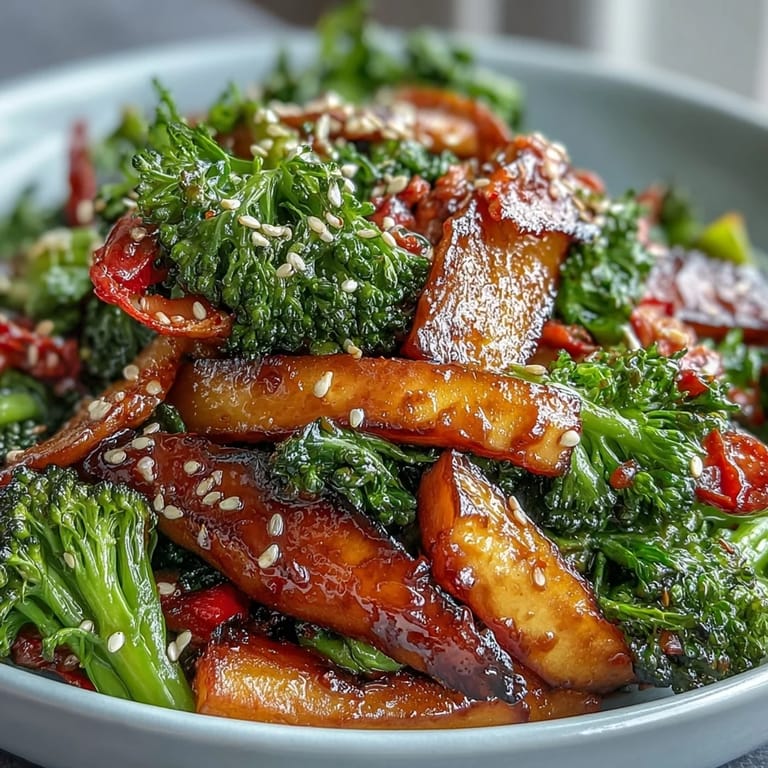
Save This stir-fry has become one of those dishes I make without thinking, the kind that tastes different every time but always feels exactly right. It's proof that the best recipes are the ones that fit into your life, not the ones you have to work around.
Recipe Questions & Answers
- → Can I use other fermented vegetables instead of kimchi?
Yes, sauerkraut, pickled vegetables, or even homemade fermented vegetables work well. Just adjust the seasoning as needed since different ferments have varying levels of salt and acidity.
- → How do I keep vegetables crisp-tender?
Work quickly over medium-high heat and don't overcrowd the pan. Cut vegetables uniformly so they cook evenly, and test frequently—they should be tender but still have a slight crunch.
- → Can I make this ahead of time?
You can prep all vegetables in advance, but it's best cooked fresh. Reheating may soften the vegetables too much. If you must reheat, do so gently over low heat.
- → What makes this dish probiotic-rich?
Adding kimchi at the end preserves its live beneficial bacteria. Heat can destroy probiotics, so incorporating kimchi after cooking maintains its gut-healthy properties.
- → Can I add protein to this dish?
Absolutely. Tofu, tempeh, edamame, or even scrambled eggs work beautifully. Add plant-based proteins during vegetable cooking time, or stir in cooked proteins at the end.